
What Is The R Word And Why It Still Matters
Words shape how we see each other, often before we notice. Repeat one carelessly, and it can quietly tell a whole group of people that they count for less. That idea sits at the center of therword and the work behind The R Word Campaign. This page covers what the term means, why it hurts, and how small shifts in everyday speech make room for more respect.
Understanding The R Word
The term has a longer story than most people expect. It started as a clinical label, then slid into slang as an insult. Once you know that path, it becomes clear why so many families, teachers, and advocates want it gone for good.
Where The Term Comes From
Years ago, "mental retardation" was a formal medical and educational diagnosis. It described a condition. It was not a slur. Over time, the short version drifted out of the clinic and into the schoolyard. People started using it to mean "stupid" or "broken." That move twisted a neutral word into a cruel one. The medical sense faded, and the mockery stuck. This history matters, because the word was never built to wound in the first place.
What Does The R Word Mean Today
Maybe you have wondered what is the r word and why it sparks such strong reactions. The answer is in how people use it now. Today it works almost only as a put-down. When someone asks whats the r word, they usually already feel its weight. Here is the simplest way to explain what does the r word mean in modern speech: it treats intellectual disability as a stand-in for failure. That comparison hurts because it turns real people into a joke, rather than the full human beings they are.
How The Word Affects People
A word outlives the second it is spoken. A careless comment can replay in someone's head for years. For people with intellectual and developmental disabilities, hearing the term thrown around as an insult repeats a painful message: that who they are means something bad.

The Human Cost Of Casual Language
Plenty of people who use the word mean no harm. They repeat it the way they first heard it, without picturing who might be nearby. Still, good intentions do not undo the effect. A sibling, a classmate, or a coworker with a disability hears it and feels smaller. Confidence drops. Belonging starts to feel conditional. The harm rarely shows up all at once. It builds. Bit by bit, casual language makes exclusion feel normal, until disrespect barely registers.
Measuring The Impact
It helps to see how different choices land with the people they describe. The table below lays out common moments, the message each word sends, and a respectful swap.
| Situation | Common Word Used | Message It Sends | Respectful Approach |
|---|---|---|---|
| Joking with friends | "That's so retarded" | Disability equals foolishness | "That's so frustrating" |
| Describing a mistake | "I'm such a retard" | Errors make you less human | "I made a mistake" |
| Talking about a person | The slur as a label | A person shrinks to a stereotype | Use their name or "person with a disability" |
| Online comments | The term as an insult | Public spaces tolerate cruelty | Disagree without dehumanizing |
The pattern stands out. Each respectful option says the same thing, but no one loses their dignity.
The Mission Behind The R Word Campaign
Awareness on its own rarely shifts habits. People need a reason, a community, and a clear next step. That is what The R Word Campaign gives them — a way to turn quiet unease into open support.
How The Campaign Started
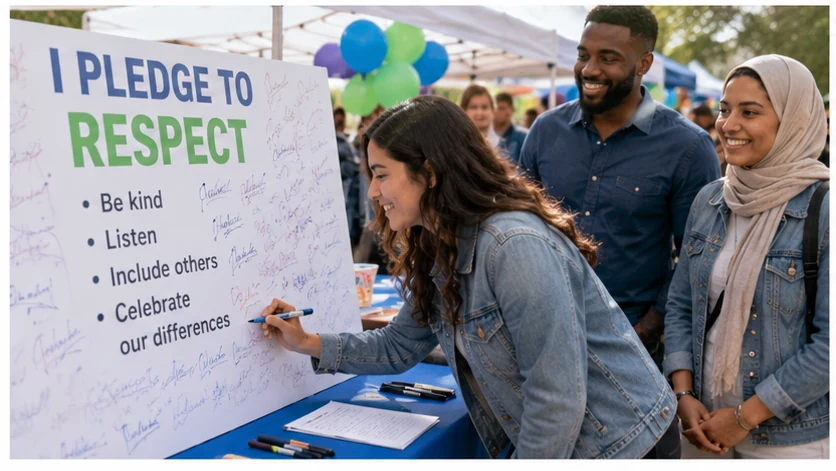
The movement grew out of a simple frustration. Families and self-advocates were tired of hearing a slur passed off as harmless slang. They wanted a positive answer, not endless policing. So the campaign built itself around a pledge: stop and think before you speak, then pick a kinder word. The hopeful tone is what made it work. It invited people in instead of shaming them. Year by year, schools, sports teams, and workplaces took up the message and made it their own.
Simple Ways To Take Action
You do not need a stage or a title to help. Small, steady choices add up fast. Here are practical steps anyone can take today.
- Take the pledge to drop the word from your own speech, and mean it.
- Correct friends gently, aiming at the word rather than the person.
- Swap the slur for a precise word that says what you actually mean.
- Share what you have learned about therword with family and coworkers.
- Back organizations and events that push for disability inclusion nearby.
- Model respectful language around kids, who pick up habits early.
Respectful Language In Online Gaming And Casino Communities
Respect does not end where a hobby begins. Anywhere people gather to compete and have fun, language sets the mood. Online gaming and casino communities are big, social, and fast, which makes them a real place to practice the same care The R Word Campaign asks for.

Why Words Matter At The Table
Card rooms, poker forums, and live dealer chats move fast, and tempers spike when money and pride are at stake. In that heat, slurs slip out. One bad beat can push almost anyone to lash out. But a casino floor, online or in person, is a shared space. When players treat the chat box as a place to be cruel, they scare off newcomers and sour the whole room. Better words keep the game fun and the door open to anyone who wants to play.
Building Welcoming Casino Spaces
Casino accessibility covers more than ramps and screen readers, though those count too. It also means the social climate. Operators and players together decide whether a space feels welcoming. These steps help build communities where every guest belongs.
- Set clear chat rules that ban slurs, including the r word, and enforce them fairly.
- Train live dealers and moderators to stay calm when language crosses the line.
- Offer accessible interfaces so players with disabilities can join as equals.
- Spotlight respectful regulars as examples for the community to follow.
- Keep reporting tools easy to find so players can flag abuse fast.
- Praise wins and good sportsmanship in public to reward positive behavior.
When a gaming brand pairs fair play with respectful language, loyalty follows. Players come back to rooms where they feel safe, and that goodwill outlasts any single jackpot.
Choosing Better Words Every Day
A new habit sticks faster when you carry ready replacements. The point is not to drain speech of all color. The point is to say what you mean with more precision and more kindness.
Alternatives That Work
Most of the time, the slur is just a lazy fill-in for a sharper word. The table below pairs the feeling with a clearer option and shows why it works better.
| What You Feel | Lazy Slur | Better Word | Why It Works |
|---|---|---|---|
| Annoyed at a delay | The r word | "Ridiculous" | Names the situation, not a person |
| A plan failed | The r word | "Pointless" | Describes the idea accurately |
| Someone acted rashly | The r word | "Careless" | Targets the behavior, not a group |
| A rule seems unfair | The r word | "Absurd" | Keeps the critique sharp and clean |
Precise words make you sound more thoughtful, not less passionate. That is the quiet upside of dropping the slur.
Talking To Friends And Family
The toughest talks are often with the people closest to us. Lead with curiosity, not confrontation. Ask whether they know where the word came from, and share what you have learned. Keep it warm. Most people are not cruel; they are just on autopilot. A calm "hey, that word actually hurts people I care about" works far better than a lecture. Patience changes more minds than pressure ever does.
FAQ
Common questions about the r word, its meaning, and how to respond to it with care.
What is the r word exactly?
It is a slur that grew out of an old clinical term for intellectual disability. Once a medical label, it became an insult that links people with disabilities to failure or foolishness. That is why advocates ask everyone to stop using it.
Whats the r word and why is it considered offensive?
The word is "retard" used as an insult. It offends because it turns a real group of people into a punchline. Even without bad intent, it tells those with intellectual disabilities that their identity is something negative.
What does the r word mean in everyday conversation today?
In daily speech, people use it to mean "stupid" or "broken." That strips away the original clinical sense and replaces it with mockery. The effect is to dehumanize, which is exactly why The R Word Campaign pushes for better choices.
Is it really a big deal if I do not mean it that way?
Yes, because impact outweighs intent. Listeners with disabilities, or who love someone with one, still feel the sting. A different word costs you nothing and shows real respect.
How can I support The R Word Campaign?
Take the pledge, trade the slur for precise words, and gently nudge others to do the same. Sharing the message at home, at work, and in online communities helps the idea spread on its own.
What do casinos and gaming communities have to do with respectful language?
These spaces are social and fast-moving, so they show how language sets a tone. When operators promote casino accessibility and ban slurs in chat, they build welcoming rooms where every player belongs.
Conclusion
The talk about the r word is really a talk about respect. A word that began in a clinic became a weapon, and changing our speech means setting that weapon down. Knowing what the term means, seeing its human cost, and reaching for better words are small acts with long reach. At the dinner table or in a live casino chat, our words tell people whether they belong. The R Word Campaign asks for one small but powerful habit: stop, think, and speak with care.